Azachitao

Eugene Mobile:+2782 8900 519 Email:azaundefined@yahoo.com Web:www.martialartaza.co.za Aza System of Mastering Arts

Thursday, March 3, 2011

Posted by www.martialartaza.co.za at 11:31 AM No comments:

Tuesday, February 22, 2011

Posted by www.martialartaza.co.za at 3:58 AM No comments:

Monday, February 21, 2011

Posted by www.martialartaza.co.za at 4:33 AM No comments:

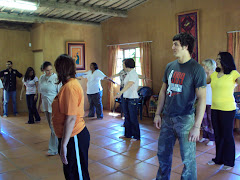
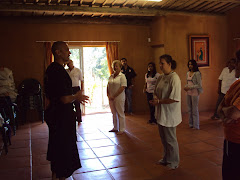
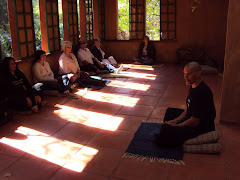
Training on the Patio at Highcroft Dojo

Posted by www.martialartaza.co.za at 4:30 AM No comments:
Posted by www.martialartaza.co.za at 2:56 AM No comments:

THE WHEEL OF TIME

Posted by www.martialartaza.co.za at 2:54 AM No comments:
Posted by www.martialartaza.co.za at 2:40 AM No comments:
Posted by www.martialartaza.co.za at 2:36 AM No comments:

Friday, February 18, 2011

Posted by www.martialartaza.co.za at 11:44 AM No comments:

Sunday, February 13, 2011


Posted by www.martialartaza.co.za at 12:15 PM No comments:
Newer Posts Older Posts Home
Subscribe to: Comments (Atom)

Click on the link below

Martial Arts website
Aza System of Mastering Arts

THREE TIPS ON SAFE LIVING

THREE KEYS TO SAFE LIVING

"One good way of winning a fight is to avoid it!"

1. BE CONSCIOUS OF YOUR ENVIRONMENT'S BASIC ROUTINE

Everything in the manifested universe functions on habit (basic modus operandi), whenever a predator enters the scene, things tend to change! Get to know the routine of your environment, everything out-of-the-ordinary spells danger! When you get home, be aware, are your pets acting normal? You wake up at night, are the night-sounds as usual? Make a conscious study of your everyday basic surroundings; it can save your life and it can be a lot of fun on top of that!

2. START MOLDING YOUR CONDUCT STRATEGICALLY

Never sleep, go to the toilet or bath with an unlocked door, whenever you are more vulnerable than normal, be prepared!

Do keep the volume of your TV /Radio down and do not watch TV with your back to an open door. Have five different strategies worked out in your mind and if confronted, remember to scream as loud and continuous as possible.

Please remember, if there is one criminal in front of you, there will already be two or more behind you!

When nearing an auto-bank, be wide awake; memorize the position of the keys on the key board and cover your hand with your wallet while entering your pin-code! The moment you realize there's trouble, hit "cancel", if the card remains stuck type a false 'pin-code' in, three times (visibly), then leave the scene as quickly as possible. Remember to phone and cancel your card immediately!

Memorize emergency numbers and teach these numbers to your kids! In case of injury use 082 911 first, as they are more likely to respond. Memorize your local security company's number (in case 10111 remains engaged) since they are also likely to respond immediately.(Numbers relevant to South Africa, people in other parts of the world will have different emergency numbers)

3. GET TO KNOW YOUR OWN SUB-CONSCIOUS-WORKINGS

Some say one will never really know how you will react in a "real" situation. Well, in the face of proper analysis, this is simply not true!

Every person on this planet has experienced some kind of emergency at some stage in the past…maybe your dogs started fighting, or you were insulted by an aggressive stranger etc. How did you react? That reaction/non reaction is your basic modus operandi and you cannot change that! Yet, you can work out your strategy accordingly, therefore, what you at first denied (or were ashamed of), will now become your strong-point. Also keep in mind that "anger-induced adrenalin" will have a different effect on your conduct than "fear-induced adrenalin"!

If your strategies do not relate to your character, your self-defense will be rendered useless!

'Running away to fetch help' (even if you temporarily abandon someone) is also a form of self-defense and statistically, criminals do tend to leave immediately if a victim escapes!

But if possible, please kill them…
AZA - The Way

“Whenever I talk about “The Way”, it should not be seen as a mere concept, seeing that it is far more than a concept!

It is an experience, a way of living, a way of striving..., but not the ordinary striving after some-idea, but a striving for no-thing, just for the sake of striving. It is a yearning to experience the greatness of being in the ‘here-and-the-now!’

The Free-Warrior, while traveling on “The Way” has no need for props from the external world, no need for compliments, for shoulders to cry on, and no need for super flues gifts of any kind!

When the ordinary world of the average person dissolved into an abysmal void, the ‘Travelers of The Way’ started their journey to Mastery as ‘Silent Witnesses’ of existence.

They travel alone, where they draw from their own convictions all the Power necessary to overcome any obstacle that may arise on the Secret Path.

They see no need for complaining or for peoples praise, yet their Solitude are filled with Mystery, with a kind of Silent Knowing the average world will never know...”

-Eugene -

Quotation from Memoirs of a Virtual Illiterate

COGNITIVE PROGRESS


Close to fifty years ago, the French progressive psychologist Jean Piaget (1952) articulated a theory of how children think about and comprehend their environment. This theory includes four stages that have proven useful in understanding the cognitive progress of children. The sensory-motor stage (0 – 2 years) transpires from birth to about two years of age. During this stage children learn by sensing and by doing. Since infants have not heard language long enough to understand it well, they learn through what they see, hear, taste, smell and feel. At first, children do not understand that things they cannot see still exist; therefore they are unable to think about things that are not in plain view. This stage changes at about age eighteen months. As children get better at using conceptual symbols for things that are not present, they are progressing into the pre-operational stage. The pre-operational stage (2 – 7 years) lasts from about age two until about age seven. Children at this stage have realized that they are independent beings, and they have a strong inclination to think that all other people see the world the same way they do. This characteristic is called "egocentrism".

Egocentrism causes children to think the world solely revolves around them. They may appear selfish, but this stage is crucial to the development of healthy self-image. The concrete operational stage

(7 – 11 years), from about age 7 to about age 11, is characterized by the ability to perform conceptual operations. These children can formulate concrete complications in their heads, and they learn that these difficulties can be reversed. Children enter the formal operational stage (11 and up) at about age 11 or twelve. This stage lasts throughout adulthood, and is characterized by the capability to reason theoretically. They can make predictions about hypothetical situations, and they can use inductive and deductive reasoning.

SOCIAL DEVELOPMENT

In The Interpersonal Theory of Psychiatry, Harry Stack Sullivan (1953) identifies three stages of social development in pre-adolescent children.

1. In the first stage, from ages two to five, adults are the most important people in children's lives. They depend on grown-ups like mom, dad and other authorities to meet all of their basic needs.

2. The second stage lasts from about age four to eight. In this stage, children depend on their same-age peers for companionship, but the friendships are usually superficial and self-serving. These friendships are typically fleeting in duration.

3. The third stage, from ages 8 to 11, is called the companion-ship stage. Children in this stage usually form very strong attachments to peers of the same sex.

Strong friendships with same-sex peers continue throughout the teen years, but children also become interested in peers of the opposite sex. The chapter entitled "Personal Growth and Social Development" (The Interpersonal Theory of Psychiatry) will provide you with more information about sexual attraction and relationships during the teen years.

MORAL DEVELOPMENT

The most commonly cited theory of moral development is that of Lawrence Kohlberg (1969, 1981, and 1984). Kohlberg believed that moral development occurs through three levels of moral reasoning.

1. In level one, called pre-conventional reasoning, children have no internal moral values. Their moral reasoning, and consequently their behaviour, is controlled by external rewards and punishments. These external controls include natural consequences as well as rewards and punishments imposed by parents and other authority figures. Most children who are nursery age and younger use this type of moral reasoning.

2. The second level, conventional reasoning, involves the use of moral standards from external sources. A child may obey rules because he or she wants to be thought of as a "good girl" or a "good boy". They later understand that rules and laws are for the common good, (the social order), and follow these rules out of a sense of duty. Most school age children and younger adolescent children make moral decisions based on conventional reasoning.

3. The third level, post conventional reasoning, involves making moral decisions based on internalized standards that are one's own. People at this level realize that values and standards may vary from one person to another, and they make decisions based on the values upon which rules are based, rather than the rules themselves.

Since this type of reasoning involves abstract thought, most children do not reach this level until they are well into the formal operational stage of cognitive development.

As parents gain a better understanding of how children develop, they are able to mold their interactions to meet their child's needs. This is the essence of real communication between parents and children.

References

Kohlberg, L. (1969). Stage and sequence: The cognitive-developmental approach to socialization. In D. A. Goslin (Ed.), Handbook of socialization theory and research. New York: Rand McNally. Kohlberg, L. (1981). Essays on moral development, Vol. 1, the philosophy of moral development. San Francisco: Harper & Row. Kohlberg, L. (1984). Essays on moral development, Vol. 2, the psychology of moral development. San Francisco: Harper & Row. Piaget, J. (1952). The origins of intelligence in children. New York: International Universities Press. Sullivan, H. S. (1953). The interpersonal theory of psychiatry. New York:
THE HISTORY OF CHI-TAO

The word Kung-Fu basically means “Fire” and “Time” or to put it analytically one can call it a dynamic Power (fire) that takes a lot of devotion (time). Kung Fu used to be called ‘Wu-Su’in ancient times and it is translated as ‘knowledge’ and ‘skill’.
Kung Fu can be traced back thousands of years in time. Around 2674 B.C. the Yellow Emperor, Huang Ti used Kung Fu like strategy (then called Chiou Ti) in his battles to great success. At that time Kung Fu was restricted to weaponry techniques.
In 2600 B.C.a form of wrestling as well as hand to hand combat developed in China but the greatest change happened in 520 A.D. when Ta Mo (better known as Bodhiharma) introduced Yoga to the Tao.
Ta Mo was the 28th patriarch after Gautama and he introduced Buddhism to the Tao. Ta Mo also introduced a very advanced form of unarmed combat to the Tao. There he established the world famous Shaolin Temple (Temple of the new Forest) from where Kung Fu developed into a system of supernatural strength.
Legend holds that Ta Mo received a secret teaching from Arabic women that were schooled in ‘Shadow Warfare’ (known today as Ninjas), but it is at this point where history gets lost in legend.
Kung Fu grew to great heights as the ages went by but it became very corrupted by power-hungry fanatics.
In 1417 a Tao monk by the name of Chang San-Fung realized that Kung Fu is going into a very egoistic direction. Chang devoted his whole life in developing a style that is aimed at Spiritual growth instead of physical worship. It took him 42 years to prepare his internal style up to satisfaction. At a later stage Master Wang Tsung-Yueh developed a similar system; unfortunately both original systems are lost in time.
These two styles developed into what is known today as Tai-Chi.
The second last soft fist style that developed was in the early 19th century and is known as Pa-Kua.
Soft fist remained basically unchanged until 1985 when Eugene started to develop Chi-Tao.
Eugene realized that the ‘soft’ can only be defined by the ‘hard’, just as winter can only be acknowledged by the awareness of summer. Based on this he started to develop a system that is balanced between ‘hard’ and ‘soft’, with a third secret floating point (which is a rather obvious phenomenon once realized).
After his awakening in 1995 he undertook to reflect a way of total liberation and benefit to mankind.
Chi-Tao is a system of triality, instead of duality, a perfect triangle of Void, Form and Force!

Once triality is achieved the fourth dimension lays open for mankind!

For more reading order TALKING AZA 1 at:

azaundefined@yahoo.com


THE HERMIT

BY THE RIVER FLOWING FROM THE MOUNTAIN
TO THE SEA;
A HERMIT IS WAITING IN THE SHADE
OF A WILLOW TREE;
IN HIS HEART HE HOLDS A SECRET THAT
MANY TRAVELLERS SEEK;
BUT NO-ONE IN THE WORLD UNDERSTANDS
THE LANGUAGE HE SPEAK;
YET SHOULD YOU LISTEN WITH YOUR HEART
AND NOT YOUR MIND;
IF YOU FOLLOW IN LOVE AND WONDER
WITH NO DESIRE TO FIND;
YOU WILL BECOME A HERMIT
FLOWING STILL AND FREE;
FROM THE MOUNTAIN, THROUGH THE
OCEAN, INTO INFINITY...

-Eugene-


Followers

Blog Archive

  • ▼  2011 (10)
    • ▼  March (1)
      • No title
    • ►  February (9)
      • No title
      • No title
      • Training on the Patio at Highcroft Dojo
      • No title
      • THE WHEEL OF TIME
      • No title
      • No title
      • No title
      • No title
  • ►  2010 (8)
    • ►  December (1)
    • ►  June (2)
    • ►  April (5)

About Me

My photo
www.martialartaza.co.za
See attached letter Eugene Halliday azaundefined@yahoo.com
View my complete profile